


16-year-old Sofia Vorobei explains why European basketball is suffering from competition with the NCAA
European basketball is at a crossroads. Top Spanish clubs such as Real Madrid and FC Barcelona are reportedly considering closing their youth academies, thanks to the drain of talent from Europe to the United States.
It’s hardly a surprise. After all, the US is the home of the National Basketball Association (NBA), and what rising basketball star wouldn’t want to be as close as possible to the world’s strongest league?
Young stars are drawn to the US college system, run by the National Collegiate Athletic Association (NCAA), as well as the financial incentives of NIL (name, image, likeness) deals. These allow college players to earn money by using their personal brand via sponsorships, social media promotions, appearances and autograph signings.
Harbingers’ Weekly Brief
Subscribe to the Harbingers’ Weekly Brief, a newsletter written by the editorial board of Harbingers’ Magazine, the world’s youngest newsroom, delivered to your inbox every Monday morning.
![author_bio]()


Historically, the NCAA was seen as an alternative path for players not immediately ready for the professional game. However, the introduction of NIL deals in 2021 has transformed it into a destination for international talent.
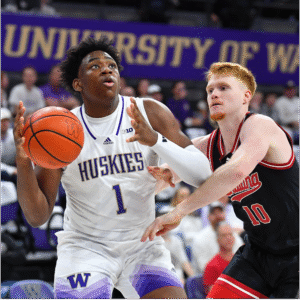
Players can earn a serious income while gaining exposure in the US, which makes the NCAA a more attractive option than even the biggest European clubs. Last year, Great Osobor, a forward who started out playing for a high-school club in England, signed the largest-known NIL deal of around $2m after transferring to Washington.
The number of international student-athletes competing in NCAA Division I men’s and women’s basketball has more than doubledsince the 2009–10 season, from 668 to 1,838 in 2024–25. The greatest rise is in women’s basketball, from 262 players to 950. These international players come from Canada, Europe (especially Spain) and Australia.
Take 19-year-old Italian shooting guard Dame Sarr. After developing within FC Barcelona’s system and making his EuroLeague debut, Sarr attended the 2025 Nike Hoop Summit –an annual basketball game showcasing the top US high-school players against a team of international players – but without Barça’s permission. This led to a mutual agreement to part ways.
Sarr has since committed to Duke University in North Carolina, and now has the opportunity to play on the “biggest stage”in college basketball.
Another player that chose NCAA over staying in Europe is Real Madrid’s former combo guard Jan Vide. He was clearly a standout in Spanish basketball, winning MVP honours at the 2023 Next Generation Tournament and among the top scorers at the 2023 International Basketball Federation (FIBA) U19 World Cup. He joined Madrid at the age of 14, but in 2023, aged 18, he moved to the UCLA team in California.
FIBA – the world governing body for basketball – had given more than €20m to national federations in Europe via its Youth Development Fund. The continent’s EuroLeague is constantly aiming to grow, but loses out to the American one every single time.
European clubs invest enormous sums in nurturing young talent, often without a guaranteed return.
The departure of players like Sarr is not only a loss of potential on the court but also a financial setback, as clubs receive no compensation when these players leave for the NCAA. This trend is making clubs question the viability of their youth programmes.
In response to the growing talent drain, FIBA is asking for the implementation of a mandatory Letter of Clearance for international players transferring to the NCAA. This measure aims to treat such moves in a similar way to international transfers between professional clubs. The logic goes something like this: “If we let you take a player, we should be compensated for our development efforts and the loss to our team.”
European basketball clubs are now basically given a choice: get left behind or adapt. Some are willing to roll with the latter, but heavyweights such as Real Madrid or Olympiacos aren’t happy with either option. They want their leagues to grow, to become a powerhouse on their own – not to be merely a pipeline to the USA.
Still, even if they do find a way forward, it’s only fair that clubs get compensated when their players move to the US. After all, developing talent isn’t a charity, it’s an investment.

© 2026 The Oxford School for the Future