The Editorial Board acknowledges progress for the inclusion of the LGBTQ+ community in society and the setbacks they still face in 2025
27 June 2025
Why Pride Month matters: Honouring the journey and amplifying LGBTQ+ voices
&
, Sofia Vorobei&
, Arnav Maheshwari&
, Charlotte Wejchert&
, Klara Hammudeh&
, Hesandi Ravisinghe&
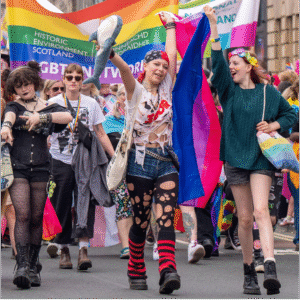
Lola KadasPride Month is a time to celebrate the LGBTQ+ community, but it can also serve as a launching pad for further discussion about discrimination and other hardships that are still prevalent today.
It was US president Bill Clinton who declared June as Pride Month, back in 1999. June was chosen to commemorate the Stonewall riots, which began on 28 June 1969. The culmination of grievances against police harassment and discrimination against LGBTQ+ individuals reached a tipping point when a violent police raid took place at a New York City gay bar called the Stonewall Inn. The riots ended six days later.
Subsequently, LGBTQ+ activism took flight. However, Pride Month’s commemoration certainly didn’t resolve all the issues that the LGBTQ+ community continued to face for decades to come – same-sex marriage in the US was legalised only ten years ago – and continue to face today.
Even though LGBTQ+ individuals have often had to hide their true self from society, their presence throughout history, even without due recognition, is doubtless. They have always been here because they are part of humanity.
Harbingers’ Weekly Brief
For instance, LGBTQ+ portrayal in culture is far from new. Queer characters, often veiled in subtext, have existed for centuries in books, plays and films, their identities insinuated but rarely stated. Only in recent years has this representation become more explicit. From coded characters in 20th-century literature to the emergence of LGBTQ+ storylines in 2000s television, representation has grown – but is it improving?
Today, TV shows such as Heartstopper and Sex Education offer more thoughtful portrayals of LGBTQ+ lives: authentic, emotionally rich and central to the plot without being sensationalised. However, some fear this progress masks a troubling trend; forced inclusion can lead to underdeveloped, stereotype-driven characters. Rather than enhancing visibility, such portrayals risk flattening identities and reinforcing harmful clichés.
Historically, queer narratives were veiled; now, they’re louder – but volume doesn’t always equal depth. As representation increases, so must nuance. Visibility matters, but authentic storytelling matters more.
Globally, Western media has led in this shift, while representation in non-Western cultures remains limited or taboo. As of 2025, 65 countries have criminalised homosexuality, while 14 countries have criminalised gender identity and/or expression of transgender people. Such laws make it difficult for someone to discover their sexuality or gender identity and connect with other people in the community.
Oftentimes, people from unsupportive families or societies do not learn of the existence of the LGBTQ+ community or have only seen it in a negative light until they’re much older. Such ignorance results in homophobia, transphobia and social rejection – which are leading factors in the prevalence of mental health issues among queer people.
Public support and visibility
Social media allows many young people to learn about the LGBTQ+ community earlier on, spreading awareness and allowing queer youth to discover their identity in a safer way. It fosters a sense of community and belonging, which is a crucial factor in good mental health.
Social media representation amplifies one’s understanding of sexualities and gender identities, creating a more supportive and accepting community. Allowing young queer people to find a community outside of their families can be life-changing and even life-saving, especially to those from unsupportive societies.
The business sector also plays an important role in promoting inclusion. For example, over the past two decades, US corporations have taken an increasingly visible role in supporting LGBTQ+ inclusion, both in the workplace and in the public sphere. Each year during Pride Month, companies display rainbow logos, launch marketing campaigns and sponsor events to signal their commitment to equality.
Tools such as the Human Rights Campaign’s Corporate Equality Index(CEI) have helped drive the trend, with more than 1,400 businesses participating in 2025 and hundreds earning perfect scores for their non-discrimination policies, inclusive benefits and trans-inclusive support.
However, things are changing for the worse – at least in the US under Donald Trump’s administration. Corporate support on behalf of LGBTQ+ communities has gone quiet. Many companies have stepped back from public Pride campaigns and sponsorships due to political backlash and fear of retaliation. Gravity Research discovered that 39%of US companies reduced their public engagement this year, while none planned to increase it.
Despite these setbacks, businesses are looking inwards. The majority stand in support of LGBTQ+ employees through internal policies, employee networks and open benefits. An example is Microsoft and Lenovo, which scored highest on the CEI for its visible and internal commitments. By contrast, Amazon has faced criticism for quietly removing LGBTQ+ equity statements from its corporate policies, raising questions about the strength of its support.
Outside the US
While media attention is often focused on developments in the US, it’s important to recognise the worldwide experience of LGBTQ+ individuals.
Take Hungary, for example. The country has never been very supportive of the LGBTQ+ community. Between 1878 and 1961, homosexuality was considered a criminal offence by the Hungarian Penal Code; today, queer people in Hungary still face significant challenges.
In March, the Hungarian parliament passed extremely harsh legislation outlawing the annual Pride march and similar events, “penalizing public support for LGBT people in the country”. The authorities have stated that facial recognition technology will be used to identify individuals at the event (scheduled for 30 June), who will be fined up to €500. It is very disheartening that attending an event that celebrates freedom of expression and identity has become so risky.
To make matters worse, the message the governing Fidesz party communicates is that if children are exposed to events like Pride it will hinder their moral development – this is the party’s reasoning for banning the celebration.
To fight back, the day the law passed, thousands of people gathered in Budapest to demonstrate their support for Pride and their rejection of government policy. Such protests showcase the unity in Hungarians when there is a need to come together to stand for what is right and seek justice for those put into an oppressive situation.
Undoubtedly, the LGBTQ+ community has made tremendous strides in the right direction in recent decades. However, this success should not blind us to seeing what is still to be done.
In the vast majority of societies, LGBTQ+ individuals face harsh discrimination and marginalisation, and it can be dangerous for them to be who they are in the open. Even in countries where one can be open, or even protected by law, such rights are not always guaranteed – there are many who still hold negative views and hinder progress.
LGBTQ+ people have always and will continue to be a part of society because it is part of human nature, and as members of humanity, we must look out for each other.
Written by:
Editor-in-Chief 2025
New Jersey, United States of America
Born in 2007 in New Jersey, Noah Aaron Brühl Saphier studies in Englewood New Jersey, United States of America. He is interested in journalism, economics, science, sports, and history.
Noah joined Harbingers’ Magazine in the summer of 2023. A few months later, he became a writer covering economics, business, and politics. After almost two years of dedication and hard work, he was promoted to Editor-in-chief of the magazine. In March 2025, he took the helm from Jefferson He, who stepped down after completing his one-year term.
In his free time, Noah plays tennis and the violin, learns about exploration in the ocean and space, and travels.
Noah speaks English, Spanish, and German.
Culture Section Editor 2026
Vergel, Spain
I’m Sofia Vorobei, with a passion for quality cinema. It all started when I was around eight. While watching one of those Nickelodeon sitcoms, I couldn’t stop thinking about how fun it must be for the actors and how I wished I could be part of something like that. Ever since then, I’ve wanted my life to have something to do with it. I’ve wanted to act, create, write, direct…
In middle school, however, my perception of that changed. I wasn’t eight anymore, and I understood that this path is an uphill battle. It’s demanding, messy, and a bit like a lottery: you either get very lucky and win, or you don’t.
Still, that realisation didn’t push me away from my dream; it was simply a reality check. I began to understand that passion alone isn’t enough — it takes hard work and making the most of every resource available, while continuing to improve without rushing the process. The industry may be unpredictable, but I believe that if you truly put everything into something, it has a way of standing out.
I was born in 2009 in Kyiv, Ukraine, and moved to Vergel, Spain, near Valencia, in 2020.
I joined Harbingers’ Magazine in the summer of 2023 and have since written about the intersections of culture, creativity and society. My work with the magazine led to my appointment as Culture Section Editor in March 2025.
I also serve as Afghanistan Newsroom Editor, roles I continue to hold in 2026, helping shape the magazine’s cultural coverage and coordinate reporting within the newsroom.
I speak Ukrainian, Spanish, English and Russian.
Editor-in-Chief 2026
Georgia, United States
Arnav Maheshwari joined Harbingers’ Magazine in October 2024 after winning The Harbinger Prize 2024 in the Economics category, earning a place on the Essential Journalism Course. Writing on the global economy, entrepreneurship and macroeconomics, he quickly established himself as a thoughtful and dedicated contributor.
His work led to his appointment as Economics Section Editor in March 2025. After a successful year in the role, and in recognition of his steady development and engagement with the magazine, Arnav became Editor-in-Chief in 2026, sharing the position with Lola Kadas.
Together they will form the magazine’s first joint Editors-in-Chief, reflecting the expanding scope and ambitions of Harbingers’. Alongside his editorial leadership, Arnav will also develop Harbingers’ Lite, a self-teaching platform designed to support aspiring young journalists.
Born in 2009 and based in Atlanta, Georgia, Arnav is deeply interested in economics, global development and financial systems, and plans to study economics at university. He speaks English and Hindi and is currently learning Spanish.
Outside the magazine, he works on projects related to economic education, research and innovation, with a strong interest in start-up leadership and building initiatives with real-world impact. He has also gained international recognition by captaining his team to second place at the Economics World Cup, one of the world’s most competitive economics competitions.
Society Section Editor 2026
Warsaw, Poland
Charlotte Wejchert, born in 2008, joined Harbingers’ Magazine in August 2024 as a contributor.
She took part in a reporting trip to Yerevan, Armenia, covering the refugee crisis following the Nagorno-Karabakh war and collaborating with students from the Harbingers’ Armenian Newsroom. The trip resulted in several thought-provoking articles and marked the beginning of her regular work with the magazine.
In the autumn of 2024, after completing the writing course, Charlotte became a staff writer focusing on social affairs, human rights, politics and culture. Her strong writing and dedication led to her appointment as Human Rights Section Editor in March 2025.
After a successful year in that role, and driven by her growing interest in the impact of AI on society, including its ethical implications and its influence on education, politics and public life, Charlotte stepped into the role of Society Section Editor for 2026.
In addition to her editorial responsibilities, she will lead an open-call project exploring the ethical consequences of AI and will serve as Armenian Newsroom Editor.
Charlotte attends high school in Warsaw, Poland, where she studies humanities and plans to continue in this field in her higher education.
She also works with the Sourcery podcast, which focuses on open conversations with leading changemakers in finance and technology. Charlotte speaks Polish, English, French and Italian.
Politics Section Editor 2026
Film & Book Club Editor and Global Newsrooms Manager
Warsaw, Poland
Klara Hammudeh, born in 2008 in Warsaw, Poland, joined Harbingers’ Magazine in March 2024, writing on international affairs, crime and music.
Since joining the magazine, she has published numerous articles on politics and culture. In 2024, she reported on the US presidential elections on the ground, and in February 2025 covered the Middle East crisis from Amman, Jordan. Her strong writing and editorial work led to her appointment as Politics Section Editor in March 2025, while also serving as Poland’s 2025 Presidential Election Newsroom Editor. During her time in this role, she also reported on the ground on Zohran Mamdani’s appointment as Mayor of New York.
In 2026, Klara continues as Politics Section Editor and also takes on the roles of Film & Book Club Editor and Global Newsrooms Manager, helping coordinate Harbingers’ international reporting initiatives.
Klara attends high school in Warsaw, Poland. She plans to study psychology, international politics or criminology, preferably in the United States.
In her free time, she enjoys reading, dancing, listening to music and exploring pop culture — particularly how Broadway and the West End adapt classic Disney stories into musicals.
Science Section Editor 2026
Galle, Sri Lanka
Hesandi Ravisinghe, born in 2009 in Galle, Sri Lanka, joined Harbingers’ Magazine as a contributor to the Sri Lankan Newsroom in January 2024. After completing the writing course, she became a regular writer, focusing on wildlife and science.
Her strong interest in nature and consistent work with the magazine led to her appointment as Science Section Editor in March 2025, a role she continues to hold in 2026. She also serves as Editor of the Nepali Newsroom.
Hesandi has a deep interest in art, nature and wildlife, particularly elephants, leopards and birds.
In her free time, she enjoys painting and travelling.
Hesandi speaks English and Sinhala and is currently learning Indonesian.
Editor-in-Chief 2026
Budapest, Hungary
Lola Kadas joined Harbingers’ Magazine in the summer of 2024 as a contributor during the Oxford pop-up newsroom. After completing the newsroom and writing course, she became a staff writer later that autumn, covering society and public affairs.
Her strong writing and dedication to the magazine led to her appointment as Society Section Editor in 2025. During this time, she also reported from Bali, Indonesia, where she worked on a special project exploring the local mental health landscape and produced a series of thought-provoking articles.
Following a successful year in that role, and in recognition of her steady development and commitment, Lola stepped into the role of Editor-in-Chief in 2026, sharing the position with Arnav Maheshwari.
This will mark the first time the magazine is led by joint Editors-in-Chief, reflecting the growing scope and ambition of the publication. In her new role, Lola will also introduce a fact-checking system to further strengthen the magazine’s editorial standards.
Born in 2009, Lola has lived in both Budapest, Hungary, and California, United States. She is interested in music, pop culture, politics and mental health. She speaks English, Hungarian, French and Spanish.
In her free time, she enjoys going to concerts and creating studio art, and is a fan of Taylor Swift’s music.
🌍 Join the World's Youngest Newsroom—Create a Free Account
Sign up to save your favourite articles, get personalised recommendations, and stay informed about stories that Gen Z worldwide actually care about. Plus, subscribe to our newsletter for the latest stories delivered straight to your inbox. 📲
© 2026 The Oxford School for the Future